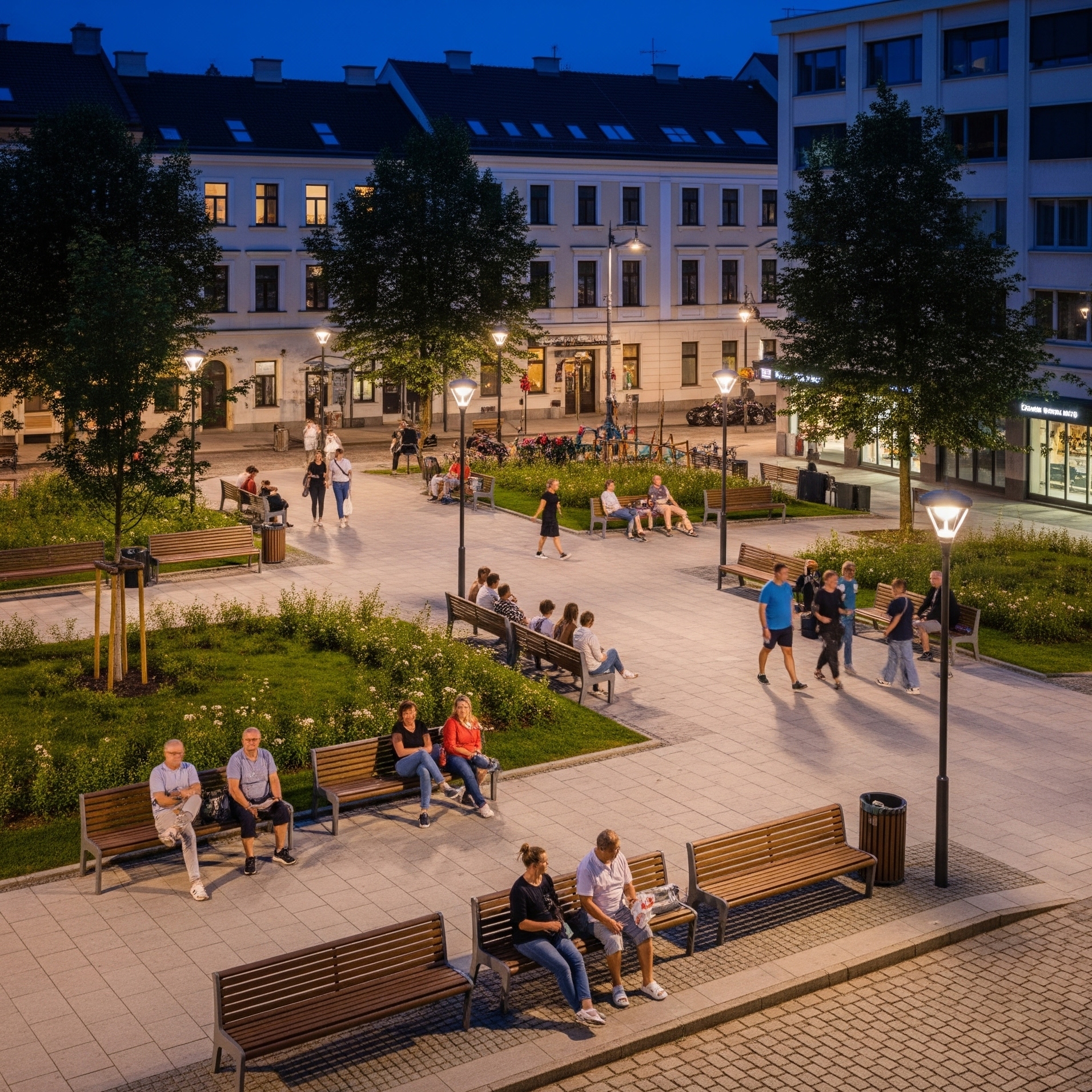
Hostile Architecture or Responsible Space Management?
You can’t fix the world from a storefront. Yet small business owners, property managers, and city officials are asked to do just that. They didn’t create the homelessness crisis. They don’t control housing policy, mental health infrastructure, or state budgets.
Still, when they take steps to manage the space they’re responsible for, they’re often met with intense criticism. A bench divider or motion-sensor light becomes a symbol of “punishing homelessness”, even if the intent is simply to keep a doorway clean, an employee safe, or a customer willing to return.The tension between maintaining dignity and maintaining order is the conversation that we need to have.
This article introduces six common arguments made against hostile design in responsible space management. Each one reflects valid concerns, but often overlooks context: limited authority, constrained budgets, and the need to protect the intended use of a shared space.
Critics argue that certain design elements are hostile and dehumanizing. It’s a fair concern. When a person has nowhere to go, even a small barrier can feel like rejection. But does that make every design decision unethical? What if it’s not about exclusion, but about safety, hygiene, or the basic ability to function as a business?
People sleep in doorways because they lack better options, and that’s tragic. But the presence of someone in crisis doesn’t erase the needs of others. Shopkeepers shouldn’t have to choose between opening their doors and protecting their employees. A humane society can care about both the unhoused and the people trying to make a living or enjoy a public venue.
One common criticism of responsible space management is that it reinforces systemic inequality. They are correct that there are deep racial and economic disparities in who is most affected by homelessness. But highlighting inequality doesn’t mean every action taken by a property manager is oppressive. Most of these individuals are responding to specific issues in their immediate environment, not making policy.
We need to be able to name structural injustice without assuming malicious intent behind every locked gate or bench armrest. Space management isn’t a solution to inequality, but it’s also not the cause.
Another frequent claim is that design features don’t solve homelessness. That’s true, but they were never intended to. No one’s claiming a few lighting adjustments or a sloped planter will end poverty. These changes are about managing behavior in specific spaces, not addressing the root causes of societal breakdown.
We can’t expect people on the front lines of property management to fix what local, state, and national policy hasn’t. Instead, we should ask: are the steps they’re taking reasonable given the circumstances?
Some critics say certain design features are pre-emptively treating the homeless as criminals. But most property stewards are seeking to avoid confrontation and struggle to get law enforcement resources even when they are needed. When done well, space management reduces the need for escalation because it establishes clear boundaries. A well-lit alley or secured entrance is all about discouraging activity that makes a space unsafe or unusable. That’s not criminalization, that’s crime prevention.
Another common argument is that a specific design feature or intervention erodes public life, that it says that certain people simply don’t belong. But spaces have functions that they were designed to support.
Designing space to be orderly isn’t an attack on community; it’s part of how communities survive. Planners and managers aren’t trying to make cities cold or hostile. They’re responding to daily, practical challenges with tools that are available and affordable.
Finally, some argue that these design choices undermine our shared humanity. But real compassion isn’t about avoiding discomfort, it’s about making space work for everyone. These choices support clean, functional, and safe environments that uphold the dignity of all who use them. They aren’t a rejection of compassion, they’re a response to real-world challenges.
When systems fall short, property stewards need practical, humane ways to manage space. With the right framework, it’s possible to respect everyone’s dignity while ensuring safety and functionality for all who share the space.
Responsible Space Management Requires:
- Proper authority: Only take action in areas where you have clear ownership or responsibility; public or adjacent spaces require coordination, not improvisation.
- Prevention over confrontation: Use thoughtful deterrents such as lighting, barriers, or design changes to reduce unsafe or inappropriate use before it puts anyone at risk.
- Respect for surroundings: Interventions should not disturb neighbors, disrupt nearby services, or create unintended hazards for the broader community.
- Do no harm: Avoid features or actions that can injure, humiliate, or escalate. That includes water sprayers, blue lights, metals spikes or sharp features, and extremely high frequency noises.
- Equitable application: Make your design choices fairly, focusing on behavior and space usage, not personal characteristics such as income, age, race, or gender.
- Compassionate intent: Design for safety and function while treating all space users with dignity.
Related Reading:
Explore how defensive architecture and responsible space management shapes urban life through policy, design choices, and public perception.
- The Costs and Harms of Homelessness – A learning brief that examines the multidimensional nature of the costs associated with homelessness.
- Definitions of Hostile Architecture and the Implications – Design decisions that signal how a space should or shouldn’t be used.